

Space ISAC’s seventh annual Value of Space Summit (VOSS VII), co-hosted by The Aerospace Corporation will explore the theme of Resilience by Design: Building, Operating, and Defending Space Capabilities.
VOSS VII serves as an annual forum for Space ISAC members and partners, bringing together leaders and experts from across the space, security, and threat intelligence communities to advance the resilience of the global space ecosystem. This year’s theme highlights the importance of embedding resilience across the full lifecycle of space systems, from design and development to operations and defense. As space capabilities become increasingly critical to economic prosperity, national security, and daily life, collaboration across government, industry, and academia is essential to ensuring these systems remain reliable, adaptable, and secure in an evolving operational environment.
Join us to connect with leaders building and defending the next generation of space capabilities.
VOSS VII events take place over multiple days, featuring a variety of sessions and engagements. During registration, please select all events that you’d like to attend to help us plan accordingly. Details on scheduled events can be found below by selecting each day’s tab. Daily agendas are notional and subject to change. Information will be updated regularly.*
Please note that Space ISAC members are allotted a specific number of free tickets to VOSS based on their membership level. Emails with those discount codes have been sent to each member organization’s designated representative. Please reach out to [email protected] if you have questions about your organization’s complimentary member tickets.

Save the Date for VOSS 2027
August 30 – September 2, 2027
Sponsored by:
Sponsored by:
This session explores emerging threats and security challenges across the space enterprise, from cyberattacks against critical satellite systems and supply chains to counterintelligence risks and the growing influence of artificial intelligence in space operations. Attendees will gain insight into architectural, policy, and regulatory gaps that impact mission assurance, resilience, and the protection of global security space capabilities.
**Important Information:
Sponsored by:
Sponsored by:
Due to space capabilities becoming increasingly critical to national security, adversaries are expanding their efforts to exploit weaknesses across ground segments, supply chains, commercial space assets, and operational networks. This session explores the key threats affecting the space ecosystem, from cyberattacks and insider risks to space weather and force employment impacts, while identifying approaches to enhance security, resilience, and mission success.
**Important Information:
Sponsored by:
Sponsored by:
The Space ISAC Securing Space Architectures Tabletop Exercise is a facilitated, team-based exercise designed to explore how architecture decisions, operational response actions, and information sharing influence mission resilience during evolving space and cyber incidents. Unlike a traditional discussion-only tabletop exercise, this activity incorporates a gamified decision-making framework that encourages participants to evaluate tradeoffs, prioritize actions, and adapt to changing conditions in real time. By having participants divide into teams and assume the role of staff of a fictional satellite communications provider, attendees will experience and work through injects employing impacts as seen to the following domains and segments: ground, link, space, launch, cyber, land, sea, air, and space.
The injects and captured details are centered plus include the following regions or locations: LEO and SSO orbits, the Middle East (Beirut, Dubai, Strait of Hormuz, etc.), European nations (Baltic States and nations adjacent to the Baltic Sea) and the United States (Florida and CA Launch Locations/Pads).
**Important Information:
Sponsored by:
Join us to kick off VOSS VII with an interactive experience. Connect with peers across the space community while enjoying provided food and libations.
Sponsored by:
Kick off VOSS VII with a relaxed networking breakfast designed to connect attendees before a day of interactive working sessions begins. Enjoy a light breakfast while engaging with peers across industry, government, and academia in an informal setting that encourages conversation and collaboration.
Sponsored by:
Sponsored by:

Space cyber-cognitive warfare will be shaped not only by emerging technologies, but by the assumptions embedded in how nations design, employ, and defend space capabilities. This talk applies a strategic foresight lens to examine assumptions about attribution, warning time, human control, system resilience, commercial neutrality, orbital sanctuary, and the reliability of information in increasingly contested and AI-enabled environments. By exploring how these assumptions could be invalidated through technological disruption, adversary adaptation, or unexpected interactions across the space, cyber, and cognitive domains, the analysis highlights pathways to operational and strategic surprise. The objective is not to predict a single future, but to identify where current concepts may prove fragile and to help build forces, architectures, and decision processes that remain effective when expected conditions no longer hold.
Sponsored by:

This session examines the current state of commercial space supply chain manufacturers and the dual effect of cybersecurity boundaries on the broader ecosystem — how they strengthen resilience for prime contractors and larger players, while simultaneously creating cost, access, and participation barriers for smaller manufacturers trying to compete. Drawing on sustained industry engagement and research, the talk argues that resilience by design has to account for who gets priced out of the boundary, not just who’s protected by it.
Sponsored by:
Sponsored by:


Learn how to apply the SPARTA and D3FEND frameworks to analyze and deconstruct an attack on a real spacecraft.
Sponsored by:
Sponsored by:


Join Space ISAC for a high-fidelity, scenario-driven Tabletop Exercise (TTX) designed to stress-test the resilience of space systems architecture. Participants will navigate a capture the flag exercise featuring multi-stage attacks, moving beyond manual processes to explore how automated threat intelligence orchestration accelerates detection and response. Using the Cyware Labs philosophy of interconnected security, commercial operators, government stakeholders, and cybersecurity leaders will simulate the operationalization of threat intelligence at scale. This exercise focuses on breaking down organizational silos to enable bidirectional, real-time information sharing and the automated dissemination of actionable insights across the global space enterprise.
Sponsored by:
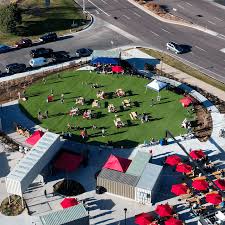
Attendees are invited to gather at Red Leg Brewing Company to connect and continue discussions from the day. This is an informal, self-hosted networking opportunity with food and beverages available for purchase.
Sponsored by:
Sponsored by:

Sponsored by:

Keynote Address.
Sponsored by:



As NASA advances its Artemis Program, the Moon is emerging as the proving ground for resilient space systems. Building a sustained lunar presence requires infrastructure that can operate through extreme temperatures, communication delays, limited resources, and long-duration missions.
This panel will explore how resilience is being designed into lunar habitats, power systems, communications, and logistics to enable reliable, continuous operations. Panelists will also discuss how these innovations will shape the future of space exploration, commercialization, and long-term human presence beyond Earth.
Sponsored by:
Sponsored by:



From secure software to resilient architectures, confidence in space systems is foundational to growth. This fireside chat examines how engineering practices and transparency are strengthening trust across customers and partners.
Sponsored by:




Software and connectivity are transforming space operations. This panel examines how digital engineering, secure development practices, and integrated cyber strategies are enabling stronger and more scalable systems.
Sponsored by:
Sponsored by:
Sponsored by:

This session will examine the importance of leveraging existing international regulatory frameworks and standards to reduce barriers to market access, helping UK space companies scale more effectively into global markets. It will also highlight the value of trusted international partnerships and information-sharing networks, including the role of Information Sharing and Analysis Centres (ISACs), in strengthening collective security and resilience across the space community.
Finally, the keynote will provide an update on the UK Space Agency’s approach to developing the UK Space Watch Centre business case, outlining the strategic rationale, progress to date, and how enhanced space domain awareness capabilities can support the long-term resilience, safety and competitiveness of the UK’s space sector.
Sponsored by:


Space capabilities are increasingly integrated with terrestrial and cyber systems, creating new demands for seamless coordination, interoperability, and real-time decision-making across domains. This panel will examine how commercial dual-use space systems are evolving into distributed on-orbit security sensors, enabling anomaly detection, cyber defense, and broader multi-domain awareness. As satellites take on active sensing roles in addition to payload delivery, panelists will discuss how commercial ownership and operation can improve resilience, situational awareness, and response speed.
Sponsored by:


As demand for space-enabled services grows, operational excellence becomes critical. Speakers share lessons on maintaining quality, responsiveness, and performance in fast-moving mission environments.
Sponsored by:
Sponsored by:



This panel will examine how adversaries are increasingly employing irregular warfare and gray zone tactics in the space domain to shape the strategic environment below the threshold of armed conflict. Through the lens of Project Gray Orbit (PGO), panelists will explore how ambiguous, deniable, and often civilian‑proximate activities in space—ranging from interference and coercion to exploitation of commercial systems—are challenging traditional concepts of deterrence, defense, and space operations.
The discussion will focus on the growing interdependence of civil, commercial, and national defense space capabilities, and why effective responses demand closer public‑private partnership (P3) and whole‑of‑government integration. Panelists will address how to better identify, track, and understand adversarial irregular activities in space, and how governments and industry can coordinate to mitigate these threats while preserving resilience, legitimacy, and freedom of action. The session will conclude with practical insights on aligning public, commercial, and defense stakeholders to maintain space advantage in future competition and conflict.
Sponsored by:

Resilient systems are not static. Panelists discuss how flexible design principles, open standards, and digital engineering approaches allow space capabilities to adapt as mission needs change.
Sponsored by:

HTTP-based exposure counts return thousands of records that reduce to almost nothing real. The same infrastructure queried over SNMP returns the actual fleet: 437 deployed VSAT terminals across fifteen countries, half running SNMP v2 against explicit NSA guidance, plus five satellite management servers on operating systems abandoned years ago.
Adrian Cheek, senior cybercrime researcher at Flare, shows you both pictures side by side, then how to separate a real fleet from replicated noise.
You’ll leave knowing how to:
Sponsored by:

Keynote address.
Sponsored by:

Sponsored by:
Join us for an evening networking event designed to bring VOSS VII attendees together in a relaxed, social setting. Connect with colleagues, meet new partners, and continue conversations from the day’s sessions while expanding your network across the space ecosystem.
This year’s event will take place at COATI, featuring a mix of indoor and rooftop spaces that offer a fun, laid-back atmosphere. Enjoy a burger bar with vegetarian options, along with access to pool tables, pinball machines, and plenty of space to mingle.
With food, drinks, and a vibrant setting, this is the perfect opportunity to unwind, build connections, and keep the conversation going.
Sponsored by:
Sponsored by:

Blast off into nostalgia when you (from your laptop or smart phone at your pace) take part in the “Cyber Attack Along the Space Oregon Trail” simulation where the beloved retro classic Oregon Trail video game meets up in a cyber-attacked final frontier! Command your spacecraft, defend against relentless cyber-attacks, and manage your crew’s survival as you fight for survival in space—but will you be able to avoid the dreaded space dysentery?! Just like the original simulation game, but with more space themed drama and less gravity!
Sponsored by:


The Center for Aerospace Resilient Systems at ERAU will demonstrate its Orbital Virtual Environment, a Digital Twin environment for satellites and constellations for cyber testing.
Sponsored by:

Safety-critical agentic AI pursues defined objectives through autonomous decision-making in high-risk environments, representing a paradigm shift from traditional, fixed-context automation. In aerospace systems, this capability compresses operational decision cycles, accelerating the observe–orient–decide–act (OODA) loop, while introducing new challenges in trust, authority, and assurance. Accelerating decision speed does not equate to removing human authority, with significant operational, legal, and systems engineering implications. This paper addresses a central systems engineering challenge: testing and validating safety-critical, agentic AI deployed on constrained edge systems. Validation must be bifurcated into two complementary domains. Safety validation, ensuring correct decisions under nominal conditions, is supported through physics-informed, high-fidelity digital twins evaluating decision logic and state transitions across mission phases. Security validation, ensuring correct behavior under adversarial conditions, requires structured internal red teaming emulating realistic threat behavior targeting perception, reasoning, and decision pipelines. Digital twins provide a foundation for safety assurance, but are insufficient for security validation without adversarially representative environments. Trust must be disambiguated between decision soundness and reasoning integrity, dimensions independently vulnerable to adversarial manipulation, including spoofed sensor inputs, corrupted telemetry streams, and crafted inputs targeting embedded reasoning models. We propose a lifecycle-aware systems engineering framework integrating model-based systems engineering, digital engineering environments, and adversarial testing, supporting risk-informed decision-making across development, deployment, and operations within edge computing constraints.
Sponsored by:
Explore how industry-recognized certifications can dramatically enhance your career trajectory, open new professional doors, and provide a competitive edge in today’s rapidly evolving technology landscape.
This session covers essential cybersecurity certifications that validate critical skills and knowledge while spotlighting the innovative Space Systems Security Engineering Professional (S3EP) certification program from Parallax Cyber.
Sponsored by:
As space systems become increasingly critical to economic prosperity, national security, and daily life, the demand for professionals who understand both space operations and cybersecurity continues to grow. Yet space cybersecurity remains an emerging field, with limited educational pathways, few standardized training resources, and an evolving professional identity.
This session discusses the development of space cybersecurity education through the experience of Indiana University’s Space Cybersecurity Program, the first academic dedicated initiative designed to address this interdisciplinary workforce gap. The session will discuss the origins of the program, lessons learned from training participants from government, industry, academia, and the military, and insights into the skills and competencies most needed across the sector.
Building on these experiences, the presentation will explore the next phase in the maturation of the field: the transition from individual courses to a broader professional ecosystem. Topics will include the development of specialized training pathways, digital credentials, a Space Cybersecurity Body of Knowledge (SCBOK), and the Certified Space Cybersecurity Specialist (CSCS) certification initiative. The session will conclude by discussing opportunities for collaboration among academia, industry, government, and nonprofit organizations to help build the future space cybersecurity workforce.
Sponsored by:
Sponsored by:


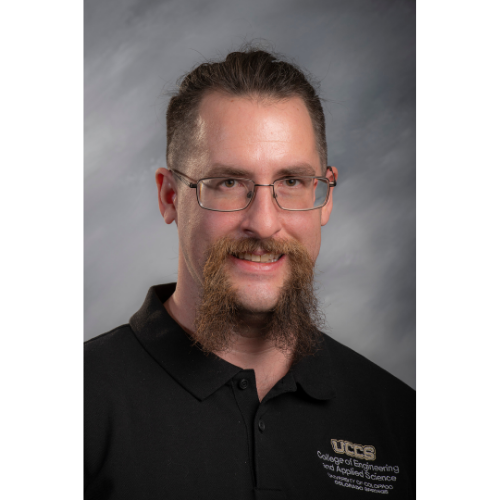
This faculty panel brings together expertise in avionics, embedded systems, space systems engineering, aerospace, cyber intelligence, security, and computer networks. The discussion will explore how engineering data and cyber threat intelligence can support more resilient spacecraft operations and better-informed mission decisions. The panel will also introduce AORTA as a framework for translating telemetry anomalies into explainable, cyber-relevant insights aligned with SPARTA.
Sponsored by:
Sponsored by:




This student panel highlights emerging perspectives on the technical, cyber, and operational challenges facing modern space systems. Panelists will discuss how students are contributing to space cybersecurity, resilient engineering, threat awareness, and mission-focused innovation through research, education, and hands-on experience. The conversation will also explore the skills, interdisciplinary collaboration, and workforce development needed to support the future of secure and resilient space operations.
Sponsored by:
Sponsored by:
This hands-on workshop builds resilient cyber operations (RCO) decisioning reflexes: the ability to make sound defensive decisions for space systems under time pressure and shared risk. Working in five teams, one per operating environment (Terrestrial, Aquatic, Aerial, Orbital, Deep Space), participants run a company. In each timed round, the team reads a contextualized threat and decides which resilience measure and which detection signature to deploy from a finite budget, then lives with the consequences as a gated attack chain either advances or is blocked. The exercise compresses the full METEORSTORM five-function cycle and its Learn-Apply-Build-Simulate progression, mapped to NICE/NIST workforce competencies, moving participants from naming the taxonomy to operating the whole decision under realistic constraints. No prior space or cyber background is required, making it well-suited to a mixed audience of students, faculty, industry, and government.

Sponsored by:
Wrap up the VOSS VII Student & Faculty Day experience with a relaxed evening of networking under the stars. From 7:30 PM – 9:30 PM MT, enjoy dessert-style finger foods, a hosted bar, and a casual atmosphere designed for connection and conversation after a full week of programming.
Throughout the evening, the Colorado Springs Astronomical Society (CSASTRO) will be on-site with telescopes for guided stargazing, while GEOpardy! will offer a fun, team-based space trivia competition where attendees can test their knowledge and compete for the title of GEOpardy! Champion.
Whether you’re networking, exploring the night sky, or enjoying some friendly competition, this event is the perfect way to close out VOSS VII.
Aaron Comis is a Senior Digital Transformation Architect at The Aerospace Corporation, where he serves as a technical and strategic advisor for the Digital Engineering Program Management Office of the National Nuclear Security Administration, also advising the US Space Force on the Digital Engineering Ecosystem design space.
Previously, Aaron served as Chief Engineer for Digital Engineering at NASA Goddard Space Flight Center, where he led both Goddard’s Digital Engineering initiative and NASA’s first enterprise-scale Digital Thread pilot and Digital Ecosystem pathfinder. He has also held key roles at the Office of Naval Intelligence and NASA Johnson Space Center.
Aaron chairs the AIAA Digital Thread Enablement and Acceleration Working Group and is an INCOSE Certified Systems Engineering Professional (CSEP). Aaron believes enterprise transformation requires balancing unique mission demands, tailored technology enablement, and realistic expectations for organizational achievement.
Adrian Cheek is a Senior CyberCrime Researcher at Flare and founder and chief researcher for Coeus. He has experience building and running Intelligence, Threat Hunting and Fraud Teams in six different countries, including the US, Brazil, Canada, and the UK. Adrian has previously been recognized for his online criminal attribution work and provides training and data assistance to Law Enforcement and private sector businesses globally.
Adrian is a former Law Enforcement officer from the United Kingdom. He had a pivotal role in the disruption and takedown of the Game over Zeus botnet in 2014 and numerous digital fraud & AML operations. Adrian specializes in Criminal Network Attribution and disruption.
Andy Sauer is a cybersecurity leader and recognized industry expert, laser-focused on helping organizations build cybersecurity maturity. In his role as CEO with Sentinel Blue, he leads the exceptional service delivery team and personally specializes in simplifying and driving action on cybersecurity program development. Andy also hosts The Watchers, a podcast exploring the people and ideas shaping cybersecurity, national security, and the defense industrial base. His work centers on Zero Trust, cloud security, and helping organizations build real cybersecurity maturity rather than just checking compliance boxes. Before co-founding Sentinel Blue, Andy managed cybersecurity operations in the defense industry, internally as a defense contractor, and externally as a consultant. Outside of cybersecurity, Andy is a husband and father, and serves his local community as a Paramedic.
Anthony ‘Nino’ Rizza is a Global Security and Intelligence Studies student at Embry-Riddle Aeronautical University whose research focuses on cybersecurity and resilient satellite communications. His work explores the application of advanced error-correcting codes to improve the security and reliability of satellite networks. As a panelist at Space ISAC, he will discuss emerging challenges in space cybersecurity and the role of error-correcting codes in protecting next-generation space systems.

Ariele Faber builds future-ready systems for high reliability leaders & organizations. As an expert facilitator, she cultivates imagination, trust, and calculated risk-taking within and between teams. In all of her work, she aims to improve human health, dignity, and security on Earth and beyond.
Ariele was the first Chief Experience Officer for the Centers for Medicare & Medicaid Services (CMS) where she translated customer & workforce needs into enterprise decision-making. Prior to this role, Ariele served as a Presidential Innovation Fellow at the General Services Administration (GSA) where she led federal-wide initiatives focused on Human-Centered IT Modernization, Digital Health, and Building a Future of Work through a Culture of Care. During this time, she completed special assignments across the Department of Health and Human Services, the White House Office of Science & Technology Policy, NASA Jet Propulsion Laboratory, and the General Services Administration AI Center of Excellence. Earlier on, Ariele worked across startups, small businesses, non-profits, and corporations specializing in experience design for healthcare and life sciences.
Ariele holds a Bachelor’s degree from Middlebury College; a Master of Science from Imperial College London; and a certificate from the Yale School of Public Health.
Brandon Bailey is a principal engineer for the Cybersecurity and Advanced Platforms Subdivision (CAPS) at The Aerospace Corporation, at The Aerospace Corporation. In this role, Bailey has focused on developing a cyber range to support penetration testing training and in-the-lab evaluation of customers’ implementations, performing vulnerability assessments and penetration testing activities for multiple customers as well as performing cybersecurity research on ground systems and spacecraft systems to better position the federal government with respect to protection of our critical space infrastructure. Bailey has also led the development of the space-focused tactic, technique, and procedures (TTPs) framework called Space Attack Research and Tactic Analysis (SPARTA). SPARTA is intended to provide unclassified information to space professionals about how spacecraft may be attacked. Bailey is a former civil servant at NASA, where he led various cybersecurity efforts and was awarded NASA’s Exceptional Service Medal for his landmark cybersecurity work in 2019. He has extensive experience in the test and evaluation of systems and technology using high-fidelity digital twins with specialization in cybersecurity.
Cash “Dynamo” Bond is a recently retired U.S. Air Force and Space Force leader with more than 25 years of experience in irregular warfare, offensive and defensive cyber warfare, advanced technical signals intelligence (SIGINT) exploitation, electronic warfare, electromagnetic spectrum operations, radar and satellite systems, systems engineering, modeling and simulation, and multi-domain kinetic/non-kinetic integration. Until recently he served as Chief of Operations for Mission Delta 6 at Combat Forces Command, where he led U.S. Space Force offensive and defensive cyber operations, drove intelligence-informed tasking and tactics development, oversaw major weapon-system modernization and acquisition efforts, and advanced critical operational technology and industrial control systems security initiatives. A prior National Laboratory Technical Fellow and former Chief of Cyber Science and Technologies Development, Cash holds advanced degrees in information assurance and computer science (both with highest honors).
Charles “Chuck” Cynamon is President of Telesat Government Solutions, a U.S.-incorporated, wholly-owned subsidiary of Telesat. Mr. Cynamon is responsible for defining the government division’s commercial, operational and strategic initiatives and deliver the latest-generation of commercial Low Earth Orbit satellite capabilities to the U.S. military, intelligence and civil sectors.
Mr. Cynamon brings deep knowledge, expertise and leadership acumen from over 24 years of service in the U.S. Air Force and a subsequent decade working with leading space and satellite enterprises. Most recently he was Senior Vice President at LinQuest Corporation, where he led the company’s largest division and the development of Allied Space partnerships that serve the National Security Space community and U.S. Government agencies.
Previously he served as Vice President, Business Development and Strategy for MacDonald Dettwiler & Associates Information Systems, leading the company’s growth in the emerging space market; and earlier as Senior Director for Hughes Network Systems’ Defense & Intelligence Systems Division.
Mr. Cynamon holds a Bachelor of Science in Aerospace engineering from Boston University and a Master of Science in Systems from Western New England College. Additionally, he earned a Master of Military Arts and Sciences from Air Command & Staff College and a Master of Strategic Studies at the Air War College.
Chris Burmeister is a business development consultant to the global aerospace & defense industry. His consultancy, Sector Groundswell LLC, matches novel capabilities of companies in allied countries to interested commercial and defense customers in the U.S.
Chris is consultant to Crosshill Ltd, a Tampere, Finland-based designer, manufacturer, and tester of secure electronic hardware. Crosshill is a member of both Space ISAC and Space ISAC’s Quantum Community of Interest.
Prior to starting Sector Groundswell, Chris spent his career in aerospace, defense, and commercial telecommunications industries. Most of his work as an engineer occurred in Houston at what is now Lockheed Martin Space. He honed his product marketing, business development, and campaign management knowledge at both Lockheed Martin Rotary & Mission Systems in Moorestown, NJ and at a former telecom printed circuit board manufacturer west of Boston.
Chris believes in colleague empowerment and in principled, strategic intent.
Chris earned his BS Aerospace Engineering degree from the University of Kansas and his MBA from the Samuel Curtis Johnson Graduate School of Management at Cornell University. He is a member of the National Defense Industrial Association (NDIA), NDIA Space Division, NDIA International Division, the Air and Space Forces Association (AFA), National Security Space Association (NSSA), and Institute of Navigation (ION).
Executive Summary
Chris is a highly decorated military leader and strategist whose eminence spans the Defense, Air Power, and Cyber Operations enterprises. A seasoned leader who has commanded at every echelon—from the squadron to the component command level—he is a recognized authority in defining and executing multi-domain operations, U.S. Department of Defense strategy, cross-domain policy, and executive leadership.
Strategic Leadership & Information Warfare
Operational Air Power Foundation
Education & Core Competencies
Daniel is a consultant with over 30 years in communication networks, covering R&D, systems engineering, enterprise architecture and business development in local and global leadership roles. He specialises in Defence, Satellite, Cybersecurity and public sector ICT, securely connecting devices to the Internet. He translates complexity, blending strategy, technical depth, business acumen and political insight. Daniel is leading CyberOps to become an agile, AI aware, cybersecurity services organisation to support its customers on their security journey. Daniel is the chair of the spacecyber inc not for profit that organises of the Australian Space Cyber Forum, an annual conference dedicated to growing a sustainable space cyber community in Australia by convening leaders from industry, government and academia across Australia and internationally.
David Sobeck is an aerospace engineering student and incoming graduate student at Embry-Riddle Aeronautical University’s Daytona Beach campus. He serves as a research assistant with the Center for Aerospace Resilient Systems, where his work focuses on aerospace modeling and simulation, applied artificial intelligence, digital engineering and cyber-physical systems research.
His technical background includes machine learning, LLM-enabled systems, high-fidelity simulation, computational modeling, digital-twin development and aerospace materials research. He has contributed to the development of OrbitVE, a configurable space systems simulation environment that supports satellite modeling, software- and hardware-in-the-loop integration, mission experimentation and research into space-system resilience.
Mr. Derek Davis serves as the Chief, NGA US Space Command, USSPACECOM. He is responsible for bringing the entirety of GEOINT capabilities to bear against USSPACECOM’s challenges. He leads an integrated team of professionals providing essential expertise including geospatial analysis, data and systems engineering, information technology, source operations, security and international affairs in support of combatant command priority intelligence requirements, space and counterspace warfighting mission requirements and developmental requirements.
Prior to this assignment, Mr. Davis served as the Director, Source Strategies Office where he led 24/7 global GEOINT tasking and collection orchestration leveraging national and commercial sources to meet mission requirements. In addition to overseeing imaging operations, he also directed persistent Overhead Persistent Infrared coverage, tailored meteorological products and time-sensitive reports on crisis areas and humanitarian disasters globally.
Mr. Davis previously served as the Deputy Director of the Source Mission Integration Office and National Systems Integration Division Chief where he led the NGA team responsible for transitioning new national, commercial, foreign and airborne collection sources as well as associated ground systems into operations for the geospatial enterprise. During 2017-2019, Mr.Davis served as the Senior GEOINT Functional Advisor within the Office of the Director of National Intelligence.
Mr. Davis joined NGA in 2010 serving as a Staff Officer developing requirements documents and advocating for future collection capabilities to include OPIR and other national collection systems. He also served as the Deputy NGA Support Team Chief on NA’s support to the US Navy.
Prior to NGA, Mr. Davis served in a variety of roles in the United States Air Force as a space operations officer and systems engineer throughout his 21-year career. He planned and guided development and operations for future space and counter-space systems in various staff and leadership roles at 14th Air Force headquarters, Air Force Intelligence, Surveillance, and Reconnaissance Agency, Headquarters US Air Force, and the National Reconnaissance Office.
Mr. Davis holds a bachelor’s degree in Aeronautical Engineering from Rensselaer Polytechnic Institute and master’s degrees in Space Operations and Strategic Intelligence from the Air Force Institute of Technology and the National Intelligence University, respectively.
Dr. Dianne Poster provides more than two decades of technical experience in research and development for measurements, standards, technology, and data at the United States (U.S.) Department of Commerce (DOC) National Institute of Standards and Technology (NIST).
Her portfolio covers innovative developments in radiation physics and chemistry, materials engineering, and optical, dimensional, and chemical metrology. Her current work supports the U.S. DOC National Oceanic and Atmospheric Administration (NOAA), Office of Space Commerce promoting U.S. space commerce through international technical standards development and innovation in space systems, data, and cybersecurity technologies. She leads DOC representation for the U.S. interagency supporting space activities, including developing principles for national strategies in cislunar science and technology, planetary defense, low Earth orbit research and development, and in-space servicing, assembly and manufacturing.
Previously, as the deputy associate director for technology and environmental policy at the White House Council on Environmental Quality, Dr. Poster administered the environmental federal regulatory portfolio and advised on policy and strategy issues related to protecting the environment.
Dick Wilkinson is the CTO and Cofounder of Proof Labs. He works in the Space-ISAC Cyber Vulnerability Lab offering technical security assessments of Space technology. He is a retired Chief Warrant Officer 4 from the US Army where he served as Signals Intelligence analyst for the NSA and as a cyber lab director for the Secretary of Defense. Upon retirement he served as the CISO and CTO for the Supreme Court of New Mexico before incorporating Proof Labs.
Erin has over a decade of experience building meaningful tech collaborations and has formed hundreds of formal partnerships between government, industry, and academia to solve problems for warfighters and national security. Currently, Erin is the Executive Director of the Space Information Sharing and Analysis Center (ISAC), a 501(c)(6) Public-Private Partnership (P3) and the only all-threats security information source for the public and private space sector. Erin took the direction from the White House in 2019 to build the Space ISAC community and it now operates a global Watch Center tracking the adversary from ground to space. Under Erin’s leadership Space ISAC is building the first Accelerating Space Capabilities (ASC) AUKUS program in partnership with The Aerospace Corporation.
Erin was the Managing Director of the Center for Technology, Research and Commercialization (C-TRAC) and brought three USAF-funded programs to bear at the Catalyst Campus for Technology & Innovation (www.catalystcampus.org) from 2016-2018. Her expertise in brokering unique partnerships using non-FAR type agreements led to the standup of the Air Force’s first cyber focused design studio, AFCyberWorx at the United States Air Force Academy, and the first space accelerator, Catalyst Accelerator, at Catalyst Campus in Colorado Springs – in partnership with Air Force Research Laboratory, SpaceWerx and AFWERX.
In 2020 Erin was a recipient of the Woman of Influence award. In 2018 Erin was recognized by the Mayor of Colorado Springs as Mayor’s Young Leader (MYL) of the Year Award for Technology. She is also the recipient of Southern Colorado Women’s Chamber of Commerce Award for Young Female Leader in 2018.
In her previous roles she developed and managed intellectual property portfolios, technology transfer strategies, export control/ITAR, secure facilities, and rapid prototyping collaborations.
Professor Eytan Tepper serves as Research Professor, Space Governance & Security and Director of the Space Governance Lab at Indiana University Bloomington, where he is affiliated with the Ostrom Workshop established by Nobel Laureate Elinor Ostrom. He teaches courses on Space Governance and Space Cybersecurity and leads research projects on global space governance, space-cyber power, and the commercial space revolution. Dr. Tepper earned his doctorate from the McGill University Institute of Air and Space Law and subsequently pursued a postdoctoral fellowship at the New York University (NYU) School of Law. Dr. Tepper has published in journals like the Maryland Law Review, the Georgia Law Review, the NYU Journal of International Law and Politics, Constitutional Political Economy, Global Studies Quarterly, McGill Annals of Air and Space Law, Journal of Space Law, Space Policy Journal, and Georgetown Journal of International Affairs. Prior to his return to academia, he was a practicing lawyer with a career spanning the public and private sectors, representing government ministries and Fortune 500 companies.
Frank Backes is the former CEO of Capella Space, which was acquired by IonQ in 2025. Over a career spanning more than three decades, he has led the development and deployment of advanced technologies supporting global communications, intelligence, surveillance and reconnaissance (ISR), and positioning, navigation, and timing (PNT) systems. His experience spans satellite launch, as well as command, control, and communications architectures.
Prior to Capella, Frank served as Senior Vice President at Kratos Federal Space, wherehe also led the company’s Commercial Cyber division. He is widely recognized for pioneering the integration of cybersecurity principles into space systems. Earlier in his career, he was CEO of Braxton Technologies and Braxton Science & Technology Group, organizations known for delivering mission-critical command and control software across national security and commercial space programs.
Frank is the founder and President of the Space Information Sharing and Analysis Center (Space ISAC) and serves on the Board of Directors of Modern Technology Solutions, Inc. (MTSI). He holds a Bachelor of Science in Electrical Engineering with a focus in Semiconductor Physics from the University of California, San Diego, along with minors in Communications, Marketing, and Computer Hardware. In 2009, he was honored with the Ernst & Young Entrepreneur of the Year Award for his contributions to aerospace innovation.
In 2004, Fred Slane co-founded and currently serves as the Executive Director of the Space Infrastructure Foundation. His current work includes the development of a standards-based reference architecture for the global space industry as a basis for space expansions. He is an Associate Fellow of the AIAA and is a leader in the development and proliferation of space standards in the U.S. and abroad. He has
been/is the lead for twenty-one standards on Spacecraft Initialization, Spacecraft Plugn-Play, Lunar Simulants, CubeSats, On-Orbit Servicing, and Verification. In the AIAA he serves as the Chair of the Committee on Standards for On-Orbit Servicing and Assembly. Internationally, he is the ISO Space Systems and Operations Subcommittee Chair and lead standards architect. The Space Infrastructure Foundation is a member of CONFERS, a consortium for on-orbit servicing. In CONFERS Fred served as the Standards Architect on the original DARPA effort. Currently, the Space Infrastructure Foundation is researching the utility of a reference architecture for space for NIST/NOAA OSC.
Twice retired from the U.S. Air Force, his assignments included STS Cargo Operations, space technology R&D, space test and evaluation, staff officer at the original US Space Command, and as Chief Architect and Engineer for the Operationally Responsive Space office. He has published over 15 papers and reports and has presented numerous classes and presentations on space architecture and standardization in the US and abroad. He has degrees in Physics (MS), Mathematics, Engineering and International Business (MBA).
Married to Dr. Jean Slane for 41 years, they live in Colorado Springs, Colorado and Lagos, Portugal.
Dr. Gabrielle Hedrick is a Space Technology Advisor at SAIC, supporting the Principal Director for Space, Office of the Undersecretary of War, Research and Engineering, on cislunar and space domain awareness topics. Previously, she was an Aerospace Engineer at the MITRE Corporation where she focused her research on space traffic coordination, cislunar space and commercial space transportation. She has a master’s degree in mining engineering, for which she spent a year mining gold in the Amazon Rainforest, a master’s degree in Planetary Sciences, focused on long-term planning for the NASA Mars rover Opportunity, and a PhD in Aerospace Engineering with a dissertation centered around terrain-aware path planning for the NASA Mars Sample Return rover. She is also an Emergency Medical Technician, firefighter and ski patroller in her free time.
Gedare Bloom is Professor and Department Chair of Computer Science at the University of Colorado Colorado Springs. He received his Ph.D. in computer science from The George Washington University in 2013 and joined UCCS in 2019. He was an Assistant Professor of Computer Science at Howard University from 2015-2019. His research expertise is computer system security with emphasis on real-time embedded systems. He has published over sixty peer reviewed articles, serves as a program committee member and technical referee for flagship conferences and journals, and is an editor for the IEEE Transactions on Vehicular Technology. He is a Senior Member of both the ACM and the IEEE.

Since 2011 Dr. Bloom has been a maintainer for the RTEMS open-source hard real-time operating system, which is used in robotics frameworks, unmanned vehicles, satellites and space probes, automotive, defense, building automation, medical devices, industrial controllers, and more. Some of his key contributions to RTEMS include the first 64-bit architectural port of RTEMS, design and implementation of a modern thread scheduling infrastructure, support for running RTEMS as a paravirtualized guest for avionics hypervisors, implementation of POSIX services required to be compliant with the FACE avionics standard, and RISC-V memory management unit support for protection and fault isolation. Additionally, he mentors and guides students around the world through learning about and developing with RTEMS. He co-authored the textbook "Real-Time Systems Development with RTEMS and Multicore Processors" published by CRC Press in 2020.
Gretchen Bliss is the Cybersecurity Program Director at the University of Colorado Colorado Springs (UCCS) and Vice Chair of the Board for the Space ISAC. Previously, she served as Space ISAC Secretary from 2022–2026. In these roles, she works to strengthen collaboration across the cyber and space ecosystem, advancing sector-wide resilience through shared intelligence, preparedness, and response.
At UCCS, Ms. Bliss leads efforts to expand cybersecurity education across all six colleges. Under her leadership, the School of Engineering and Applied Science, College of Business, College of Letters, Arts and Sciences, School of Education, and School of Public Affairs have launched over 20 cybersecurity programs, concentrations, or certificates. Over the past five years, she led the development and implementation of the UCCS POWER Cybersecurity Strategy (Partnership, Outreach, Workforce, Education, and Research), positioning UCCS as a key contributor to Colorado’s cybersecurity workforce pipeline.
Ms. Bliss also teaches the UCCS Gateway Seminar Cybersecurity: Fact, Fun, and Fiction (Fall 2024–present), an interactive, non-technical course designed to demystify cybersecurity, challenge common myths, and introduce students to cybersecurity principles and career pathways within an inclusive, exploratory learning environment.
Previously, she served as Cybersecurity Director at Pikes Peak State College for five years and spent 25 years in the intelligence community, most recently as NORAD Deputy Senior Analyst and Chief of Plans, supporting U.S. government efforts in cybersecurity, information operations, and computer network defense and attack.
Hector Falcon is the Director for the Space Information Sharing and Analysis Center (Space ISAC) Watch Center. Before joining the Space ISAC in 2022, Hector served as a Cyber Security Leader for Space before his retirement in 2022 from the newly established United States Space Force as a Senior Enlisted Leader helping establish diversity & fusion across intelligence, cyber and space disciplines spanning multiple career fields (both Officer and Enlisted plus Joint Service). Hector is a former Intelligence Officer serving within the Defense Intelligence Agency (DIA) as a regional leader and across the United States Air Force having served across several theaters of operation (Kuwait, Iraq, Afghanistan and Pakistan) & continents as a 26-year Air Force and Space Force Veteran. He holds a Master’s of Science Degree in Information Technology and Strategy and holds several industry certifications spanning disparate sectors. As a gray zone operations advisor, Hector continues to inform the broader community and collective through three simple questions spanning all threats & all hazards.
Ivan Kirillov is a Lead Cyber Operations Engineer at MITRE, where he leads the D3FEND for Space (D4S) effort. He and his team aim to provide the community with an ontological, cyber-physical, artifact-driven model of space systems and their security-related facets.
With 17 years of experience in cyber defensive engineering, including developing custom analytics, dashboards, threat hunting, and cyber sensor integration, Ivan has deep experience with real-world detection data, methods, and technology. He brings these skills to bear in the space domain, which has similarities to the “traditional” enterprise IT domain, but with its own unique facets and challenges. In particular, he is excited about the possibility of correlating cyber-physical data (e.g., RF measurements/telemetry) with standard cyber data (e.g., EDR events) to advance the art of threat identification and classification.
Previously, Ivan was heavily involved in the cyber threat intelligence space, including being one of the core contributors to the STIX/TAXII standards, lead of MITRE CAR, and a contributor to defensive ATT&CK. Ivan holds a master’s degree in Computer Science from Georgia Tech, and a bachelor’s degree in Electrical Engineering from Villanova University. Outside of work, he enjoys spending time with his family, tinkering with hardware and audio gear, gaming, and mountain biking.
Dr. James Curbo serves as the Chief Scientist of the Constrained Cyber Solutions Group at the Johns Hopkins University Applied Physics Laboratory. His work focuses on cybersecurity and cyber operations for space systems. His doctoral thesis at Johns Hopkins University was on cyber-resilient spacecraft design and implementation.
James B. Romano, Esq., is a Research Associate at the Indiana University Space Governance Lab, where he is affiliated with the Ostrom Workshop established by Nobel Laureate Elinor Ostrom. Romano‘s research areas include space governance, law, security, and international relations. He holds a J.D. From the Indiana University Maurer School of Law and a B.A. in International Law & Institutions and a B.A. in East Asian Languages & Cultures from the Indiana University Hamilton Lugar School. Romano has recent publications in the Georgia Law Review and the Saint Louis University Law Journal.
Mr. Jeffrey Janicik is the distinguished Founder and Chairman of Innoflight. Innoflight is a fast growing innovative company leading the market in secure, high performance and low size, weight and power space electronics. As a visionary entrepreneur, exceptional leader and highly skilled engineer, his contribution extends to pioneering advancements in reusable space vehicles, small satellites, cyber, communications including RF systems, and space networking and processing; all making significant strides in transforming the space industry. With an incredible career spanning approximately three decades, Mr. Janicik has consistently exhibited an unwavering dedication to advancing critical space systems for national security. Mr. Janicik’s journey as a space industry trailblazer began early in his career with the Air Force, where he served 33 years combined active and reserves. He was a pioneer in unmanned X-vehicle technology including the first landing of the X-37 vehicle, led numerous space programs of record and culminated his career by aiding in the establishment of today’s Space Force. He founded Innoflight just over 20 years ago after successfully leading a small team out of SpaceDev to design and launch the first Internet-based satellite into space for the UC Berkeley Space Sciences Laboratory and NASA. Under his astute leadership, Innoflight has flourished into a renowned space technology company known for its cutting-edge cyber-secure electronic hardware solutions.
Dr. Jennifer Sobanet serves as the ninth Chancellor of the University of Colorado Colorado Springs (UCCS), where she is dedicated to advancing student success, expanding the university’s research impact, and strengthening its connection to the community it serves. She leads with the belief that learning at UCCS is both purposeful and powerful: grounded in care, advanced through research, and connected to Southern Colorado’s communities to prepare graduates for a rapidly changing world.
Prior to joining UCCS, Chancellor Sobanet was the Executive Vice Chancellor of Administration and Strategy and Chief Financial Officer at the University of Colorado Denver. Earlier in her career, she served as acting Executive Director and Chief Operating Officer of the Colorado Department of Higher Education during Governor Hickenlooper’s administration. She has also held senior leadership roles at Front Range Community College and within the Colorado Community College System.
Actively engaged in civic and philanthropic leadership, Chancellor Sobanet serves as chair of the University Development Board and is a member of the Colorado Springs School of Technology Board. She is also a member of The Colorado Thirty Group and an alumna of the Colorado Springs Leadership Institute and Leadership Denver.
She holds an Ed.D. in Leadership for Educational Equity in Higher Education from the University of Colorado Denver, a master’s degree in international studies from the University of Pennsylvania’s Lauder Institute, and an MBA in international financial management from the Wharton School of the University of Pennsylvania. A Yeager Scholar at Marshall University, she earned her bachelor’s degree in economics.
Dr. Joel B. Mozer served as the first Chief Scientist of the United States Space Force from its inception in December 2019 until 2023. In this role, he led all science and technology efforts for a service comprising 16,000 space professionals worldwide and operating a global network of satellite command and control, communications, missile warning, and launch facilities. Through his nonprofit, Mind Set, Dr. Mozer acts as a futurist, aiding organizations in developing strategies and making decisions with a long-term perspective. Currently, he holds the Holland H. Coors Endowed Chair at the United States Air Force Academy, where he educates cadets on future-oriented thinking and leadership.
Jonnathan Franco is an Embedded Systems Engineer and Space Cyber Testbed Lead at UNSW Canberra Space at Australian Defence Force Academy. With extensive experience in aerospace and defence technologies, he specialises in resilient satellite communications, real-time AI applications for space systems, and advanced signal processing for space domain awareness.
His current work centres on enhancing the resilience of space communication architectures against emerging threats, including jamming and cyber vulnerabilities, while advancing passive RF monitoring capabilities for Space Situational Awareness. Jonnathan previously contributed to multiple space hardware and systems projects and holds a Master’s degree in Advanced Technology with a focus on Robotics and Mechatronics.
He is a strong advocate for international collaboration in building resilient space capabilities a and looks forward to sharing Australian perspectives on space cyber resilience at VOSS VII.
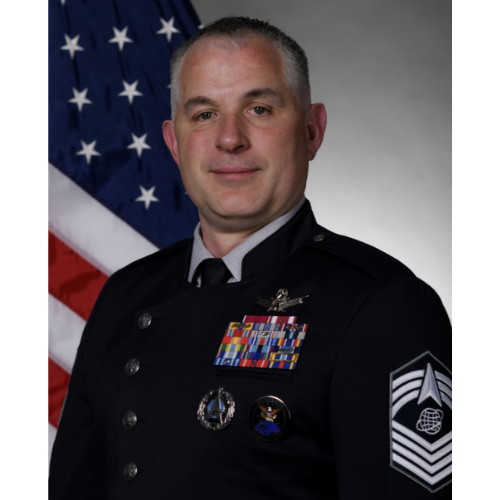
Chief Master Sergeant Joshua I. Griffin is the Senior Enlisted Advisor, US Space Command, J3 Operations Directorate supporting the J3 in deterring conflict and defending U.S and Allied freedom of action in space across full spectrum joint operations with assigned and allocated forces. Previously, Chief Griffin was the Mission Delta 31 Senior Enlisted Leader ensuring continued operations and sustainment of the Positioning, Navigation, and Timing satellite systems, satellite control network, and cyber defense operations 2023 at Peterson Space Force Base, Colorado.
Prior to these positions, Chief Griffin served as the Space Force’s first enlisted legislative defense fellow within Senator Kevin Cramer’s (ND) office as well as as congressional affairs within Secretary of Air Force’s Legislative Liaison office and the office of the first Chief Master Sergeant of the Space Force.
Chief Master Sgt. Griffin entered the Air Force April 2001. Over 19 years, CMSgt Griffin has an extensive background in tactical and strategic space capabilities including Global Positioning Satellites Space Surveillance, Sensor Management & Optimization, Space Electronic Warfare and Space Based Missile Warning. Additionally, Chief Griffin served in the Air Force 21st Space Wing’s Inspector General’s office, and culminated his Air Force career as an Operations Superintendent with the 11th Space Warning Squadron. Chief Griffin continued his military service enlisting into the Space Force September 14th, 2020.
Dr. Kelly Backes is a leader in quantum sensing at The MITRE Corporation and heads the organization’s superconducting quantum sensors program. Her work spans advanced sensor research and development, alternative PNT initiatives, and efforts to align quantum sensor capabilities with mission priorities in the space domain. Prior to joining MITRE, Dr. Backes earned her PhD from Yale University, with research focused on SQUID-based quantum-limited amplifiers and the use of quantum squeezed states to circumvent the standard quantum limit.
Kim Crider is a Founding Partner of Elara Nova. She brings more than 35 years of experience managing multibillion-dollar global operations and technology programs in space, aerospace, cybersecurity, IT, data, and AI to the core team.
A recently retired U.S. Air Force (USAF) Major General, Crider was the first Chief Technology and Innovation Officer for the newly established U. S. Space Force (USSF) where she oversaw a $2.5B Space Science & Technology portfolio and directed a $750M digital services and cybersecurity portfolio to advance the $15B global military space enterprise for 16,000 personnel. Prior to that, Crider was the Air Force Chief Data Officer, a first in the DoD, where she led the implementation of a $100M enterprise data management portfolio to assure availability of operational and business data to over 850,000 military, civilian and contract users across the Department of the Air Force’s $126B enterprise, and established a strategy for enterprise data management that has seminally influenced other DoD level data strategies and initiatives.
Crider regularly advises US Political Appointees, Service Secretaries, Military Service Chiefs, and Civil Agency leaders, as well as international military, civilian and industry leaders, on the strategic use of technology to achieve competitive advantage. She has extensive international experience having served in Europe, Australia, Asia-Pacific and the Middle East, and has been a seminal leader in global space, air and cyberspace operations, coalition and NATO command, control, intelligence, surveillance and reconnaissance, and international information sharing. She built and led two multimillion-dollar specialty consulting firms focused on IT/data strategy, cybersecurity, and digital services in the education, architecture & engineering, financial services and health technology sectors. A senior engineer at the MITRE Corporation for over 15 years, Crider led the engineering for global enterprise networks, cybersecurity, and advanced surveillance radar systems across the DoD and Homeland Security.
Crider earned a B.S. in Electrical Engineering from Duke University, an M.B.A. from Western New England University, and a Graduate certificate degree in Organizational Behavior from Harvard University. She graduated with distinction from the USAF Air Command and Staff College and the National Defense University Industrial College of 2 the Armed Forces and has been an executive fellow at the Kennedy School of Government at Harvard University and the University of Tennessee.
Kinzy Pearson is a Junior Systems Engineer at American Systems and an undergraduate student at the University of Colorado Colorado Springs (UCCS), where she is pursuing a degree in Aerospace Engineering. Her current focus lies in space domain awareness, specifically the detection of camouflaged and concealed space structures within the orbital debris population.
Kinzy was previously awarded an Undergraduate Research Academy grant from UCCS to lead research in this area, which ultimately led to her current role at American Systems. This experience allowed her to explore complex technical challenges at the intersection of aerospace and cybersecurity and present her work to professionals in the field.
Based in Colorado Springs, Kinzy is committed to growing her technical skill set and contributing to projects that support national efforts in space safety and security. Her mission is to develop as an engineer and researcher through innovation, collaboration, and applied learning.
In addition to her academic and professional pursuits, Kinzy serves as Vice President of Research for the UCCS chapter of the American Institute of Aeronautics and Astronautics (AIAA). Outside of work and academics, she enjoys crafts and baking as a creative outlet.
Professor Luigi Martino is Chief Executive Officer and founder of DamoTech, a tech scale-up dedicated to the cybersecurity of space systems. Prof. Martino holds over 15 years of experience across cybersecurity research, governance, and strategic advisory, having been working with cybersecurity and space institutions and major companies at international level.
Prof. Martino currently teaches on cyberspace and global politics at the University of Bologna, while also holding at Khalifa University the role of Senior Research Scientist and Principal Investigator on AI and cybersecurity.
He serves as the Director of the Italian National Hub on Space and Cyber (PiCS), as the Head of the Center for Cyber Security and International Relations Studies at the University of Florence, while also being affiliated with institutions such as MIT, UCL (STEaPP), the University of Kent, the Bocconi University, and ISPI.
Mana Minami is Associate Administrator at JAXA (Jaxa Aerospace Exploration Agency) and has seven years of experience in the cybersecurity field. After beginning a career as a cybersecurity consultant, she joined JAXA.
She has supported organizations in incident response and the enhancement of their cybersecurity frameworks. In the current role, she is engaged in comprehensive, organization-wide reforms designed to support recovery from a significant cybersecurity incident in 2023. This work encompasses not only incident response and the development of cyber defense capabilities, but also the establishment and continuous improvement of security policies and governance frameworks in response to the rapidly evolving cybersecurity landscape.
As a participant in the Space ISAC Japan Global Hub, she also contributes to information sharing and collaboration between Japanese and international partners, supporting efforts to strengthen cybersecurity and resilience across the global space ecosystem.
Colonel (Retired) Matt Anderson is the 16th Deputy Administrator of the National Aeronautics and Space Administration. President Trump nominated him for the position on Jan. 13, 2026, and he was confirmed in the role by the Senate on May 18, 2026.
Anderson grew up on U.S. Air Force bases around the world as the second of three sons of Paul and Patricia Anderson. Paul served as a chaplain in the Air Force and Patricia served as a schoolteacher.
After graduating from high school in New Jersey, he attended the U.S. Air Force Academy where he earned a Bachelor of Science degree in Biology and served as the team captain of its nationally ranked Division I soccer team. He later earned a Master of Science degree in Aeronautical Science and a Master of Arts degree in leadership & counseling.
Anderson is a decorated Air Force command pilot in multiple aircraft with more than 5,000 flight hours, including more than 650 in combat. He commanded the U.S. Department of War’s only nuclear airlift squadron and served as a senior United States Air Force fellow at the George C. Marshall Center in Garmisch, Germany. Throughout his 24-year Air Force career, he served on several senior DoW staffs and commanded at multiple levels before retiring in 2021.
Since retiring from military service, Anderson has served as the Chief Operating Officer and Chief Growth Officer at the Space Force Association and as a Vice President at CACI International.
Originally from Colorado Springs, Colorado, Anderson and his wife, Christine, are proud parents of two daughters, Kayla and Lauren.
Outside of work, he is an avid snow skier, golfer, and hiker, and he is currently pursuing his A-license in skydiving.
Megan (Meg) Moloney is an Associate Director in the Defense and Security segment at Guidehouse, where she advises national security leaders across the Department of Defense, Intelligence Community, and federal agencies on mission transformation, risk, and resilience. With more than 20 years of legal, investigative, intelligence, and cybersecurity experience, she is recognized for her ability to navigate complex, evolving threat environments and guide organizations through strategic and operational modernization.
Meg currently counsels senior leaders across defense and intelligence services on supply chain risk management, enterprise resilience, and mission assurance, drawing on extensive experience shaping secure, future‑ready national security capabilities. She also supports the design and stand‑up of new programs, facilitates long‑range strategy and future‑visioning efforts, and develops and executes tabletop exercises to help organizations prepare for emerging threats and gray zone challenges. In addition, she heads the Guidehouse Defense and Security Mentor Protege portfolio.
Meg’s career spans multiple pillars of the national security enterprise. She began as a business integrity attorney in New York, advancing innovative public‑private partnerships in False Claims Act litigation and federal monitorships. Her pro bono work and leadership within the New York City Bar Association’s African Affairs Committee led her to the United Nations Office of Internal Oversight Services, where she investigated serious misconduct involving peacekeepers and diplomatic personnel in West Africa.
Following her UN service, Meg joined the Federal Bureau of Investigation, serving first as an Intelligence Analyst before transitioning to become the Bureau’s first compliance attorney supporting the Intelligence Branch. She later served as a Senior Strategy, Risk, and Compliance Manager for the FBI’s Information Technology Branch, leading enterprise-level risk mitigation initiatives, shaping major cybersecurity and technology modernization efforts, and representing the Bureau in interagency engagements.
At Guidehouse, Meg leads multidisciplinary teams supporting defense and intelligence clients in designing resilient supply chain frameworks, advancing emerging technology adoption, integrating intelligence and cybersecurity missions, and architecting strategies to meet rapidly evolving threats. She is a frequent keynote speaker and contributor on topics including space supply chain risk management, cybersecurity, artificial intelligence, and leadership. She also serves in advisory roles with the Space Information Sharing and Analysis Center (Space ISAC), Iron Butterfly Media, and CyberSat.
Meg holds a Juris Doctor from The George Washington University Law School and a BA in Political Science and Anthropology from the University of Colorado Boulder. She is licensed to practice in New York and Colorado, is a Certified Information Systems Security Professional (CISSP), and previously held certifications as a Certified Fraud Examiner and Certified Compliance and Ethics Professional.
Michael Hankins is a Lockheed Martin Fellow specializing in space cybersecurity, cyber risk assessment, and integration of cybersecurity into business capture processes. Michael serves as the Lockheed Martin Space Chief Cyber Architect and has 21 years of experience as a cyber architect, cyber intel analyst, information assurance engineer, and a variety of other cyber and technical roles.
Michael Smith is the Marshall Space Flight Center Opportunities Manager. He is responsible for developing new business relationships with industry, government, and other institutions. Michael also supports center strategy helping guide the center into the next decade and beyond. Prior to joining NASA Michael was the Deputy Associate Director for Policy in the Center for Preparedness and Response at the Centers for Disease Control and Prevention where he helped guide national public health policy (and fought zombies). He also served in academia as a strategic planner at Embry-Riddle Aeronautical University where he earned two degrees.
Paul Elliott is a Subject Matter Expert (SME) in space and contested logistics with Valens Global, consultant for S10 Consulting and military analyst with NATECH. Paul is a retired, Joint-qualified U.S. Army Logistics and Space Officer with extensive experience at the division through theater level.
Since retiring from the U.S. Army in October 2024, Paul has supported a range of government-sector contracts. In this capacity, he has served as a military analyst for ten large-scale exercises focused on Europe and the Indo-Pacific, supporting Army division- through theater-level operations. He has also advised more than fifteen organizations as a SME in contested logistics and multidomain operations, contributing to operational planning efforts and business development initiatives aimed at enhancing support to the Joint Force.
Paul volunteers with the Space Foundation, supporting its mission to advance the global space community through education, collaboration, and information sharing.
During his 20-year Army career, Paul retired as an Observer Coach/Trainer with the Mission Command Training Program (MCTP). Previously, he served with the 19th Battlefield Coordination Element, where he coordinated joint effects—including space and cyber—between U.S. and NATO air and land forces across Europe and Africa. He also served as the primary Army advisor to the Director of Space Forces and the Director of Mobility Forces. In addition, Paul was selected by the 505th Training Squadron as a guest lecturer for five years, supporting the Joint Air Operations Command and Control Course (JAOC2C).
Throughout his career, Paul served extensively at the theater level, working with Joint forces as well as U.S., host-nation governmental, and non-governmental organizations. He has significant experience supporting Special Operations Forces and XVIII Airborne Corps units.
Paul holds a Master of Science in Administration and a Bachelor of Science in Business and is a graduate of Intermediate Level Education from the U.S. Army Command and General Staff College.
Mr. Pete Muend is the Director of the National Reconnaissance Office’s Commercial Systems Program Office (CSPO) where he leads the NRO’s strategy for full integration of multiple commercial imagery sources. Prior to establishing CSPO, Mr. Muend served as the NRO’s director for the Commercial GEOINT Activity (CGA), a joint initiative between the NRO and the National Geospatial-Intelligence Agency (NGA) established to position both agencies to take full advantage of existing and emerging commercial GEOINT capabilities. Prior to CGA, Mr. Muend was the Assistant Deputy Director of the National Intelligence for Acquisition where he was responsible for overseeing Major Systems Acquisitions across the Intelligence Community. Mr. Muend also served as the NRO Chief of Staff and in a number of other positions within the NRO and Office of the Under Secretary of Defense for Intelligence.
Randi Tinney is a cybersecurity expert and software developer with specialized experience in spacecraft and space related systems. Starting in 2018 as a vulnerability researcher at NASA’s Independent Verification and Validation (IV&V) facility, she conducted security research on various which rapidly expanded into penetration testing. In 2022, Randi joined the Aerospace Corporation, where she contributed to multiple projects, including SPARTA. Since 2024, she has led a dedicated team focused on both penetration testing and exploit development initiatives.
Richard Deakins is the Principal Director of Capability Transformation in the Digital Innovation Division at The Aerospace Corporation, where he leads enterprise-wide digital transformation of digital engineering, modeling & simulation, cloud, data, and AI initiatives.
With over 25 years of experience, Richard previously served as Director and Chief Engineer of M&S Enterprise Engineering at the Missile Defense Agency, where he architected adaptable enterprise simulation capabilities and secured over $350M in funding. His expertise spans distributed systems, service-oriented architectures, and cloud-based engineering ecosystems supporting critical national security space enterprise. Richard actively represents Aerospace at national technical forums and DoD-wide digital engineering communities of practice.
Rich McNally is a Senior Product Security Engineer and Vulnerability Intelligence Hunter at Xylem Inc. and spends his days bolstering global critical infrastructure resilience. His efforts are spread among application penetration testing, AI system threat modeling, leading security incident response tabletop exercises, and alerting Xylem’s product line teams to the most serious emerging threats.
As a U.S. military veteran with over 20 years’ experience, Rich cut his teeth in cryptologic language analysis, signals and digital network intelligence, and cyberspace warfare. He served as an operations officer and team leader with two special operations units across four continents and numerous combat deployments. Rich’s roles and tasks ranged from offensive cyber operations planning and execution to military information support operations.
Rich spends his off hours teaching Physical and Digital OPSEC, Expedient Software-defined Radio, and Tactical Wireless Operations to both civilian and military groups, leveraging his knowledge to arm friendly forces against people like him.
Lieutenant General (LTG) RICHARD L. ZELLMANN originally from Belle Plaine, MN, and was commissioned into the Ordnance Corps after graduation from the United States Military Academy in 1992. After completion of the Ordnance Corps Basic, the Explosive Ordnance Disposal Course, and the Technical Escort Course, LTG Zellmann began six years of service in the EOD career field. After completing company command time, LTG Zellmann attended the University of Minnesota prior to serving in the United States Military Academy’s Department of Physics and Nuclear Engineering where he was an instructor and assistant professor. LTG Zellmann attended the Space Operations Officer Qualification Course, and since 2004 has served in operational space assignments. As a space operations officer, LTG Zellmann commanded at the company, battalion, and brigade-level. He has had several tours at the Army Service Component Command level: Army Central and Space and Missile Defense Command. Following brigade command LTG Zellmann served as the Joint Force Space Component Command Future Operations Chief and worked on the establishment of U.S. Space Command. Following the establishment of U.S. Space Command, LTG Zellmann served first as the Deputy J5 and then later at the Deputy J3 before becoming the Deputy Commander Combined Joint Force Space Component. He is currently assigned as the Deputy Commander of U.S Space Command. His deployments include a deployment to Operation Iraqi Freedom with a space company and two rotations to the ARCENT operational command post.
LTG Zellmann earned a bachelor’s and master’s degree in physics from the United States Military Academy and the University of Minnesota, respectively. His military professional education includes the Ordnance Officer Basic Course, the Combined Logistics Officer Advanced Course, CAS3, Command and General Staff College, and the Air War College. LTG Zellmann’s space education includes the Space Operations Officer Qualification Course, Space 300, Advanced Orbital Mechanics, Advanced Navigation Operations, EMI Fundamentals and the Ground-based Midcourse Defense Staff Course.
LTG Zellmann’s awards and decorations include the Defense Superior Service Medal, Legion of Merit, Bronze Star Medal, and the Defense Meritorious Service Medal. He has also earned the Army Senior Explosive Ordnance Disposal Badge, Parachutists Badge, and the Master Space Badge. LTG Zellmann is married, and he and his wife have two children and one grandchild.
Rosa Szurgot is an Assistant Professor of Space Systems Cybersecurity at Embry-Riddle Aeronautical University, a 2025 Fulbright Fellow, and an NSF-sponsored doctoral candidate. Bridging avionics engineering with cutting-edge cyber defense, she researches and teaches secure command-and-data-handling architectures, resilient satellite networks, and quantum-ready communications.
In 2022, Rosa led the implementation of the full cybersecurity-requirements baseline for NASA’s Gateway lunar-orbit program—work formally recognized by both agency leadership and Gateway’s systems-engineering divisions for harmonizing complex, multi-vendor security specifications into a unified architecture.
Her current scholarship builds machine-learning defenses that detect and thwart threats across orbital, ground, and emerging quantum links while shaping national-security policy for the peaceful use of space. To translate theory into practice, she designs immersive cyber ranges where blue- and red-team operators battle across simulated interplanetary and IoT environments, each scenario bound by rigorous rules of engagement. Through this fusion of research, policy, and experiential training, Rosa equips engineers and decision-makers with the tools and insights needed to keep humanity’s expanding presence in space secure, resilient, and responsibly governed.
Rui Oliveira is Cyware’s Senior Technical Account Manager. Rui has over a decade of experience working with large enterprises in both private and public sectors. Rui manages Cyware’s ISAC/ISAO portfolio. With visibility into the multitude of sectors that the ISAC/ISAO community represents, he brings the needed insights on the needs of the community and intelligence trends to help safeguard the community.
Ryan Roberts is a Principal in Deloitte & Touche LLP’s Government and Public Services (GPS) Cyber Practice where he leads the firm at the intersection of space and cyber operations. In this role, he helps government clients enhance the cyber resiliency of their space mission systems and platforms. Ryan has overseen the development, launch, and operation of Deloitte’s Silent ShieldTM, an on-orbit cyber intrusion detection system payload aboard the firm’s first satellite, Deloitte-1. This payload is designed to defend on-orbit assets against cyber-attacks through near real-time data collection and analysis that detects anomalous activity and prevents or mitigates mission impact.
Ryan has spent most of his 25-year career supporting the Department of War and Intelligence Community in uniform, as a Government Civilian, and as a defense contractor, developing a strong understanding of how to build, secure, and defend traditional and non-traditional IT and critical infrastructure. This work includes serving as the Tier 2 Computer Network Defense Contractor lead for the Defense Finance and Accounting Service (DFAS) and focused implementation of cyber defense capabilities across multiple critical complex mission systems for the intelligence community, the U.S Air Force, U.S. Space Force, and the Missile Defense Agency.
He lives in Colorado Springs with his wife and three daughters and has a passion for RVing, smoking meat, and helping veterans as they transition into civilian life.
Samuil Nikolov is a Senior at Embry-Riddle Aeronautical University pursuing a B.S. in Space Operations. His research scope includes avionics design and integration, embedded systems, flight software development, RF communications and mission operations. He has experience in procuring rocket engine static fire tests.
Dr. Samuel Lefcourt is the founder and CEO of ReveillAI, a startup dedicated to building reliable AI solutions for aerospace defense. He received his PhD from Johns Hopkins University in Computer Science, as a member of the Institute of Assured Autonomy, focusing on building trusted AI systems for safety-critical domains. These applications include space electronic warfare, terrestrial nuclear weapon detection, and underwater combat capabilities. Dr. Lefcourt has worked with several national and international entities including AFRL, DOD, DNDO, and NIST. His work has been presented and published to wide audiences in computer science, national defense, and policy. Through these efforts, he aims to advance AI safety methods tailored for optimal human-AI collaboration.

Professor Scott J. Shackelford is Associate Vice President and Vice Chancellor for Research at Indiana University-Bloomington. He is also the Provost Professor of Business Law and Ethics at the Indiana University Kelley School of Business.
Professor Shackelford has written more than 100 articles, book chapters, essays, and op-eds for diverse publications. Similarly, Professor Shackelford’s research has been covered by an array of outlets, including Politico, NPR, CNN, Forbes, Time, the Washington Post, and the LA Times. He is the author of Forks in the Digital Road: Key Decisions in the History of the Internet (Oxford University Press, 2024), The Internet of Things: What Everyone Needs to Know (Oxford University Press, 2020), Governing New Frontiers in the Information Age: Toward Cyber Peace (Cambridge University Press, 2020), and Managing Cyber Attacks in International Law, Business, and Relations: In Search of Cyber Peace (Cambridge University Press, 2014). He is also the lead editor of the first volume dedicated to cyber peace entitled Cyber Peace: Charting a Path Toward a Sustainable, Stable, and Secure Cyberspace (Cambridge University Press, 2022).
Both Professor Shackelford’s academic work and teaching have been recognized with numerous awards, including a Harvard University Research Fellowship, a Stanford University Hoover Institution National Fellowship, a Notre Dame Institute for Advanced Study Distinguished Fellowship, the 2014 Indiana University Outstanding Junior Faculty Award, the 2015 Elinor Ostrom Award, and the 2022 Poets & Quants Best 40-Under-40 MBA Professors Award.
Dr. Sean Crouse is a researcher and faculty member specializing in aerospace cybersecurity and space operations at Embry-Riddle Aeronautical University(ERAU), where he serves as Associate Director of the Center for Aerospace Resilient Systems (CARS). His research centers on the application of artificial intelligence and machine learning for cyber anomaly detection in complex aerospace systems, resilient avionics architectures, and the integration of cybersecurity into space operations and digital-twin environments. Dr. Crouse’s interdisciplinary background in space operations, cyber operations, and system security informs his applied research across aviation, defense, and space sectors, positioning him as a leading contributor to emerging aerospace cybersecurity practices and future workforce development.
Stephen is the Head of Security and Resilience Capabilities in the UK Space Agency.
Stephen leads a team ensuring the civil space sector in the UK is resilient to disruptive challenges, by working with the sector to understand the threats and hazards, to mitigate these and to plan for the worst-case scenarios. Stephen is also responsible for national security due diligence assessments relating to the UK licensing process, foreign investments and Agency grants and funding mechanisms, as well as supporting UK involvement in ESA space sustainability programs and the sustainable use of RF spectrum for civil space applications. As space is not a nationally bound sector, Stephen is working to build international collaboration on mutually beneficial elements such as security standards, intelligence sharing and cyber security postures, to benefit both public and private systems and services and enable the safe and secure growth of the sector.
Stephen has had a diverse career, but his passion and focus has been on the space sector, a 18+ year veteran with both government and industry, combined with an extensive background in security and counter terrorism.
Stephen holds a BSc(Hons) in Computer Science, CEng and CITP accreditation.
Ted “Juice” Perry is the Director of Special Programs (SOF, OGA, Sensitive Activities) at Kwolyewm Federal Solutions. He has 25 years of Special Operations, Advanced Forces Operations (AFO), Counter Terrorism (CT), which includes the Global War On Terrorism (GWOT), Operations Inherent Resolve (OIR) and Great Power Competition (GPC). Mr. Perry has developed offensive cyber weapon systems, space-based assets and non-kinetic capabilities at the Joint and Interagency level, while carrying out operations spanning six continents. He served as the Russian New Generation Warfare (RNGW) Sensitive Activities Adviser to the Joint Chiefs of Staff during the 2014-2015 winter offensive in Ukraine, affecting the leveraging of unlicensed bandwidth to defeat UAS, electronic warfare and other platforms.
Ted Commanded at Joint levels to include strategic satellite control facilities, render safe activities, Continuation Of Operations (COOP) and Continuation Of Government (COG) organizations. Ted served in the stand up of the USNORTHCOM Domestic Cyber Watch Operations Center (CWOC), Domestic Special Operations non-kinetics cell and USSPACECOM Joint Cyber Center/Information Warfare Directorate. Ted served as a Principal Application Adviser for the development of Persistent Space-Cyber test beds to exploit on-orbit constellations; teaching and instructing space aggressors, special operations and other government agencies on how to target and induce non-kinetic effects on satellites and launch infrastructure. Ted has recently advised and performed on DARPA SCEPTER and STRATCOM Deep Strike, and the Joint Special Operations University (JSOU) for efforts to generate high fidelity/high speed all domain and gray zone operations wargaming for joint warfighting in Doctrine 2030 initiatives. Mr. Perry is a Co-author of Joint Publication 3-12 (JP 3-12) Cyberspace Operations, Army Field Manual 3-12 (FM 3-12) Cyberspace and Electromagnetic Warfare, and the Russian New Generation Warfare Handbook.
Ted Vera brings more than 30 years of experience in the national defense and space industry, supporting Department of War, Intelligence Community, and commercial customers. Ted has spent over 15 years with Kratos Defense and currently serves as the Director of Cyber Security Products. Throughout a diverse career, Ted served on active duty in U.S. Army Space Command and has held roles spanning satellite communications operations and maintenance, system administration, systems engineering, cybersecurity, and program management. Ted holds a Master of Science in Computer Science from Colorado Technical University and is a Certified Information Systems Security Professional (CISSP).
Theresa Quitto-Dickerson serves as the Commercial Space Policy & Industry Integration Lead at the U.S. Department of Commerce’s Office of Space Commerce (OSC), where she designed and proposed the architecture for OSC’s Commercial Space Strategy & Engagement Program. Her work focuses on building flexible, scalable frameworks that allow federal engagement with the commercial space sector to evolve alongside shifting mission needs, from structured industry listening infrastructure to national field engagement models spanning nearly twenty states and territories. She is also a Doctor of Business Administration candidate, with research focused on early-signal detection in complex systems, and her research on governance lag and decision architecture in commercial space operations was accepted for presentation at the 2026 IAASS Conference in France. Her writing on space governance and infrastructure has appeared in PA Times, The Space Review, and Payload. Theresa brings a systems-architecture lens to how government can build for resilience and change.
Dr. Tomas Pena is the President of Parallax Cyber. He’s a career cybersecurity, technology, cyber operations, and systems security engineering expert with over 30 years of professional experience, retiring from the U.S. Air Force as a Lieutenant Colonel and Master-level Cyberspace Operations officer. As a decorated senior military officer, Dr. Pena has led highly productive teams in functions including enterprise information technology management, military cyber operations planning and execution, special technical operations, and space systems security engineering across both ground and space segments. He’s a plank-holder of U.S. Cyber Command—the first to develop and lead its Offensive Cyberspace Operations Branch within its J3 Operations Directorate. He supported development of Joint Operations 3-12 (2009), building of the Air Force’s Cyber Weapons Instructor Course, and trained Cyber Mission Commanders on joint cyber command and control principles. Dr. Pena also lead cyber operations support contractor teams for Headquarters Cyber National Mission Force J3, and Joint Task Force-ARES.
Dr. Pena has served as the Cyber Operations Lead for the Air Force Warfare Center’s Irregular Warfare Center of Excellence, the Mission Software Lead for the Global Positions System (GPS), and as the Cybersecurity & Encryption Integrated Product Team Lead on multiple major military satellite manufacturing programs. Satellite security software he helped to develop will be in Low Earth Orbit beginning in 2026 as part of the latest generation of U.S. Space Force missile warning and tracking constellations under “Golden Dome.” His passion for artificial intelligence and protecting national security systems led him to establishing Parallax Cyber LLC in 2019, and the first of its kind Space Systems Security Engineering Professional (S3EP) Certification Program to support the next generation of cybersecurity professionals building mission-critical space technologies.
He remains an active part of the system security engineering community through professional associations with ISSA, (ISC)2, SANS, IEEE, and INCOSE. In addition, he serves as the Executive Vice President for the Information Systems Security Association (ISSA) Colorado Springs (COS) chapter and regularly mentors professionals.
Utkarsh Garg is Cyware’s Director of Engineering & Architecture. Veteran in Cybersecurity and threat intelligence. He was an integral part of shaping Cyware’s Threat Intelligence Platform (CTIX). He brings a decade in the cybersecurity space and bridges the technical divide between Customer Success and Engineering Solutions.
Bill Belei served over two decades within the United States Air Force (USAF) as a Cyber Operations Officer and retired in 2011 after serving as the Senior Cybersecurity and Communications Officer for the National Airborne Operations Center (NAOC). After retiring from the active duty, he began a career as an Air Force civilian and served for approximately 6-years as the Chief Information Security Officer (CISO) for the largest space system under the Air Force’s space portfolio. Then, in 2018, he joined the Aerospace Corporation and was named the director of the Cyber Operations and Resiliency Department (CORD) and more recently was selected to lead Aerospace’s Cyber Futures office.
William Oylando Ferguson is a U.S. Air Force veteran, IEEE Senior Member, and founder of D2 Team Corp, a 501(c)(3) nonprofit advancing open, cross-domain cybersecurity for the software-defined space enterprise. His Air Force career spans the full arc this panel cares about: he enlisted as a meteorological and navigational systems specialist, served a special duty instructor assignment at Keesler Air Force Base, and commissioned as a cyberspace operations officer. He is the author of METEORSTORM, a published threat-intelligence taxonomy in the official MISP project that gives civil, commercial, and defense organizations a shared vocabulary for modeling converged threats across terrestrial, aquatic, aerial, orbital, and deep-space environments.
By profession, an AI Product Line Architect for an organization focused on sovereign cyber capabilities, William argues that adversaries are forcing defenders to look across the entire supply chain and system life cycle at once, fusing software, hardware, and AI bills of materials (SBOM, HBOM, and AIBOM) into unified threat-intelligence enrichment rather than treating them as separate concerns. He serves as Technical Editor of the IEEE Space Systems Cybersecurity (S2CY) Working Group, Co-Chair of the Space ISAC SBOM Working Group, Subgroup Lead of the IEEE Space Systems Integration Layer Subgroup, and a member of the MITRE hardware CWE Special Interest Group.
| Download Title | Download Description |
|---|---|
| VOSS VII Locations Document | VOSS VII will take place at multiple different locations throughout the week. This document provides a comprehensive overview of all locations and events associated with the 2026 Value of Space Summit (VOSS VII). It outlines each day’s schedule, including event times, venues, and addresses, along with clear directions for navigating to key locations. |
| VOSS VII Lodging Options | This document provides the names and addresses of hotels throughout Colorado Springs, CO, convenient for out of town attendees. |
| VOSS VII Attire Guide | This document provides recommendations or VOSS VII attire. |
| VOSS VII Colorado Restaurant Recommendations | This document provides recommendations for restaurants in Colorado. |
Organizations looking to enhance their visibility at the Space ISAC Value of Space Summit are invited to explore our sponsorship opportunities.
As a sponsor, you’ll receive valuable exposure through Space ISAC’s VOSS social media promotions, logo and name recognition on the Space ISAC website, placement in participant tote bags via flyers or promotional materials, and on-site recognition throughout the event.
Sponsorships are available to all organizations, regardless of event participation, and are assigned on a first-come, first-served basis.
| VOSS VII Sponsorship Packet | This document provides detailed information about available sponsorship opportunities for the 2026 Space ISAC Value of Space Summit (VOSS VII). |













VOSS VII Disclaimer & Privacy Statement
Privacy Statement for the 2026 Value of Space Summit (VOSS VII):
Space ISAC is committed to protecting your privacy. The following privacy statement outlines how we collect, use, and safeguard personal information provided in connection with the 2026 Value of Space Summit (VOSS VII), including information collected through our event registration platform, communications, and event-related interactions.
Information We Collect
Space ISAC collects personal information voluntarily provided by registrants and subscribers, including names, email addresses, professional affiliations, and other contact information. This information is collected through our event registration platform and may also be gathered through email subscriptions, surveys, or other engagement tools associated with VOSS VII.
How Your Information May Be Used
We may use your personal information to:
You may choose to opt out of non-essential communications at any time. Space ISAC does not sell or rent personal information to third parties.
Photography, Video, and Audio Recording Policy
By attending VOSS VII, you acknowledge and agree that Space ISAC and its community may record and capture your image, voice, or likeness during the event. These recordings may be used in promotional materials, publications, or media formats by Space ISAC. Attendance at the event constitutes consent to such use.
Cookies and Technical Tracking
Our event website and associated tools may use cookies and similar tracking technologies to enhance user experience, analyze usage, and improve performance. You may manage cookie preferences through your browser settings.
Email Privacy
Email addresses collected through registration or communications will be used solely for purposes related to VOSS VII and Space ISAC programming. Space ISAC does not provide, sell, or rent email addresses to external organizations.
Youth Privacy
The VOSS VII event and its associated materials are intended for a professional audience. Space ISAC does not knowingly collect or solicit personal information from individuals under the age of 13. If we become aware that personal information has been collected from a minor without verified parental consent, we will take immediate steps to delete that information.
Third-Party Services and Links
VOSS VII registration and event communications may include links to third-party websites or services such as a payment processor. These sites are governed by their own privacy policies. Space ISAC is not responsible for the content or privacy practices of external websites.
Data Security
All personal information collected is stored securely, and access is restricted to authorized personnel. Space ISAC implements appropriate security measures to protect your data against unauthorized access, loss, or misuse.
Policy Updates
This privacy policy may be updated periodically to reflect changes in our practices or legal requirements. Any changes will be posted to our event site and communicated as appropriate. Continued use of our site or participation in the event constitutes acceptance of the revised terms.
Contact
If you have any questions or concerns regarding this privacy policy, please contact us at:
[email protected]

We’d like to hear your thoughts, questions, and feedback on our CMMC resources so we can continue to update and improve our resource library for the community!

Please provide your information below, and a Space ISAC team member will contact you shortly.
We’d like to hear your thoughts, questions, and feedback. A team member will reach out to you in response, as appropriate.