COLORADO SPRINGS, CO, February 25, 2026 — Space Information Sharing and Analysis Center (Space ISAC) is pleased to announce the First Quantum meeting this year with co-host MITRE. This significant event, set to occur today, will have an immediate impact on the global community’s access to resources on quantum applications to all sensors, networks and space systems.
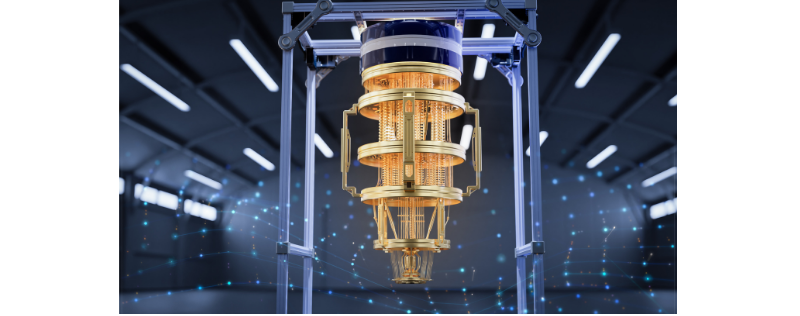
The objective of this Quantum Community of Interest is to focus on leveraging quantum technology to address security and resilience challenges in the space systems sector as it is used by all other critical national infrastructure. This group is dedicated to catalyzing efforts in applying quantum solutions while also exploring the security implications of emerging quantum technology. By hosting this event the purpose is to educate the space community and be a primary resource for knowledge on Quantum Applications for Space Systems and aims to help the community to identify the critical emerging Quantum technologies that will bring stakeholders and community together to help bridge the known and unknown critical capability gaps. Space ISAC, through the Quantum COI and other initiatives will 1) lead in the development of awareness of quantum sciences, sensing, security, and education of the COI membership, 2) foster development of and partnership with education materials to enable the membership to participate in conceptualizing application of quantum in space, and 3) undertake projects to put minds together for the advancement of quantum in the space domain. 4) develop a report to industry summarizing the relevant opportunities for quantum used by all critical sectors.
“Quantum sensing has significant potential for critical space applications,” said Dr. Kelly Backes, a quantum sensing physicist at MITRE. “Among numerous other use cases, quantum sensors’ ability to conduct broad-spectrum sensing in a single device is potentially transformative.”
Erin Miller, Space ISAC’s Executive Director, said, “The Space ISAC recognizes the importance of leveraging commercial and public sector investments in cybersecurity for space systems. As the international market demand for secure space systems surges, Space ISAC’s community promotes the use of specific tools and technologies, like MITRE ATT&CK and D3FEND, Aerospace SPARTA, and now the use of quantum technologies to protect assets on orbit and promote resiliency from adversarial attacks on critical infrastructure.”
Looking ahead, Space ISAC’s Quantum Community, together with MITRE, is enthusiastic about advancing this collaborative effort. Together, we aim to strengthen global access to resources that support the application of quantum technologies across space systems.
Background on Space ISAC
Space Information Sharing and Analysis Center (ISAC) is a 501(c)(6) organization that exists to collectively protect global space systems to secure the future of humanity. Space ISAC is located at the Kevin W O’Neil Cybersecurity Research and Education Building at the University of Colorado Colorado Springs. The Space ISAC serves to facilitate collaboration across the global space industry to enhance our ability to prepare for and respond to vulnerabilities, incidents, and threats; to disseminate timely and actionable information among member entities; and to serve as the primary communications channel for the sector with respect to this information.
As the sole all-threats security information source dedicated to the public and private space sector, our value proposition lies in being the single point of access for comprehensive data, facts, and analysis on space security and threats. After opening the Watch Center in 2023, member services include support for response, mitigation, and resilience initiatives, while breaking down communication silos of public-private information sharing.
ISACs exist to share actionable information, threat intelligence, and promote collaboration to address security challenges in their respective industry. Our approach encompasses incorporating data from the entire attack surface for space systems, taking a holistic view of threats and vulnerabilities, leveraging the diverse capabilities and expertise of our members to create a comprehensive operating picture, and partnering with members to foster cross-sector understanding and insights crucial for addressing risks to space systems.
Space ISAC originated from the Science & Technology Partnership Forum in 2017 and was officially announced during the 35th Space Symposium in 2019. It became an official member of the National Council of ISACs in 2020. The Space ISAC Watch Center achieved initial operational capability in March 2023.
Space ISAC founding members include: Kratos Defense & Security Solutions, Inc. (NASDAQ: KTOS), Booz Allen Hamilton (NYSE: BAH), MITRE, SES, Lockheed Martin (NYSE: LMT), Northrop Grumman (NYSE: NOC), Purdue University, the Space Dynamics Laboratory, the Johns Hopkins University Applied Physics Laboratory, The Aerospace Corporation, the University of Colorado Colorado Springs, Microsoft, L3Harris, Deloitte, Capella Space, and Amentum. Our members lead the global space community in identifying and responding to threats, sharing threat intelligence, analyzing trends, conducting workshops, and gaining firsthand knowledge through training cybersecurity, space and intelligence.
Space ISAC establishes partnerships with government agencies to facilitate collaboration to protect the security of the global space industry. Space ISAC government partners include: Department of Homeland Security Cybersecurity Infrastructure Security Agency, U.S. Air Force, U.S. Space Command, US Space Force, Department of State, Federal Bureau-Investigation, Japan Aerospace Exploration Agency (JAXA), Japan Ministry of the Economy, Trade and Industry (METI), Centre National D’Etudes Spatiales (CNES), United Kingdom Space Agency (UKSA), Israel Space Agency, the Greek Ministry of Digital Governance, the Department of Commerce, the National Cyber Director, the National Aeronautics and Space Administration (NASA), IC Commercial Space Council, National Space Council, and French Space Command.